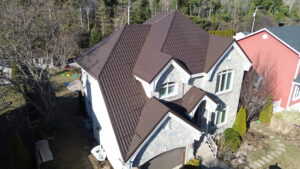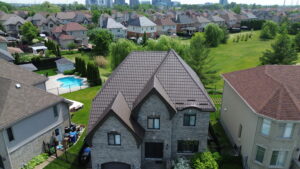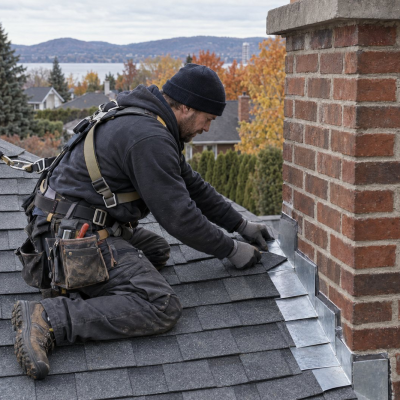
Metal roof rain noise: this is probably the most persistent roofing myth. Many homeowners hesitate to choose metal for fear of living inside a giant drum during downpours. This perception comes mainly from barns and sheds, where metal resonates loudly because there’s no insulating layer underneath.
This article compares the actual sound levels of metal and asphalt shingles, explains the crucial role of insulation and underlayment in absorbing noise, and shows why this concern shouldn’t hold back your decision.
What the data says: a 6-decibel difference
Perceptions aren’t worth much without numbers. A study conducted by the Acoustic Group at Luleå University in Sweden measured the noise of rain on different roofing materials. The results speak for themselves.
Rain on asphalt shingles installed over a complete roof assembly produces about 46 decibels (dBA). On a metal roof installed under the same conditions, the level reaches about 52 dBA. The actual difference is therefore only 6 decibels.
To put this figure into perspective, the human ear generally can’t distinguish differences of less than 8 decibels. A normal conversation is around 60 dBA. The link between a metal roof and rain noise therefore deserves some nuance: the sound remains well below the level of an ordinary conversation. On the other hand, a metal roof installed over open framing, like an uninsulated barn, reaches about 61 dBA. It’s this situation that fuels the myth.
The key role of insulation in absorbing noise
Insulation is the most effective barrier between the noise of rain and your living space. Without it, the metal vibrates and transmits sound directly inside. With adequate insulation, however, the noise drops considerably.
A layer of fibreglass or blown cellulose insulation in the attic can reduce perceived sound by 10 to 15 decibels. This reduction turns a clearly audible noise into a barely perceptible murmur. Insulation acts as an acoustic absorber that prevents vibrations from spreading to living areas.
The type of insulation also influences the result. Blown cellulose offers better acoustic performance than batt insulation, because it fills the smallest gaps. Spray polyurethane foam also provides excellent sound absorption while sealing air leaks. Whatever material you choose, properly installed insulation is enough to make a metal roof as quiet as a shingle roof.
Underlayment: an extra layer of silence
Underlayment, also called an underlayment membrane, plays a complementary role to insulation. It’s installed directly between the wood deck and the metal panels. This layer creates a physical buffer that dampens vibrations before they reach the structure.
Several types of underlayment help address metal roof rain noise:
- Self-adhesive rubberized asphalt membrane: it adheres to the deck and absorbs vibrations effectively. It’s the most common option for residential roofs.
- Synthetic felt: it offers basic noise protection while serving as an additional waterproofing barrier.
- Wood fibre boards: installed between the deck and the metal, they add a dense acoustic layer that noticeably reduces noise.
The thickness of the deck itself also makes a difference. 5/8-inch plywood absorbs more sound than a 3/8-inch panel. Every layer between the metal and your ceiling helps reduce noise.
Metal vs shingles: an honest comparison
Asphalt shingles have a granular texture that naturally disperses raindrops. This porous surface absorbs some of the sound energy on impact. Metal, being smoother and more rigid, reflects more sound. On paper, shingles therefore seem to win when it comes to quiet.
However, this comparison ignores an important detail. No one hears the noise on the outer surface of the roof. What matters is the sound that gets inside the house. And that sound depends entirely on the complete assembly: deck, underlayment, insulation and ceiling.
With a properly built standard assembly, the 6-decibel difference between the two materials becomes imperceptible to the vast majority of people. In other words, if you’re sitting in your living room during a downpour, you won’t be able to tell a metal roof from a shingle roof. In fact, specialized roofers like those at Metal Roof Canada systematically install a complete assembly that ensures optimal acoustic comfort.
Tips for maximizing acoustic comfort
If noise still concerns you despite the reassuring data, several solutions can settle the question of metal roof rain noise once and for all.
First, choose 24-gauge steel rather than 29-gauge. A thicker panel vibrates less on impact and therefore transmits less noise. Next, opt for a standing seam profile rather than a corrugated one. Concealed fasteners reduce vibration points.
Make sure your attic has at least R-40 insulation. The thicker the insulating layer, the more sound it absorbs. Add wood fibre boards between the deck and the metal if you want to go even further. According to experts at the National Research Council Canada, a good acoustic envelope protects against outside noise as much as against heat loss.
Conclusion
The myth of the noisy metal roof in the rain doesn’t stand up to the facts. The measured difference is only 6 decibels compared to shingles. This difference is imperceptible to the human ear. Insulation, underlayment and decking matter much more than the surface material.
With a complete assembly, your metal roof will be as quiet as a traditional roof. Even during the heaviest downpours, acoustic comfort remains optimal.
Still torn between metal and shingles? Request a quote from Metal Roof Canada and see the difference for yourself.