A ceiling water leak is unforgiving. Indeed, it’s never a cosmetic problem. When a brownish stain appears on the ceiling, water has already made its way through your roof, insulation and deck. Every day without action makes the damage worse and drives up the bill.
In this article, we explain the most common causes of leaks through the roof, the emergency steps to take and the long-term solutions to keep the problem from coming back. We also detail why some roofing materials protect better than others against this type of damage.
The most common causes
A ceiling water leak can have several origins. However, in most cases, the problem comes from the roof or its components. Here are the most common causes in Quebec.
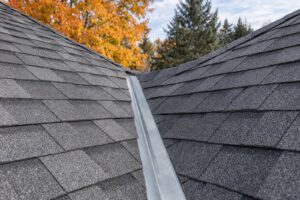
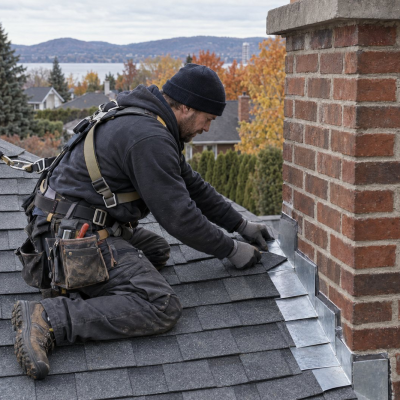
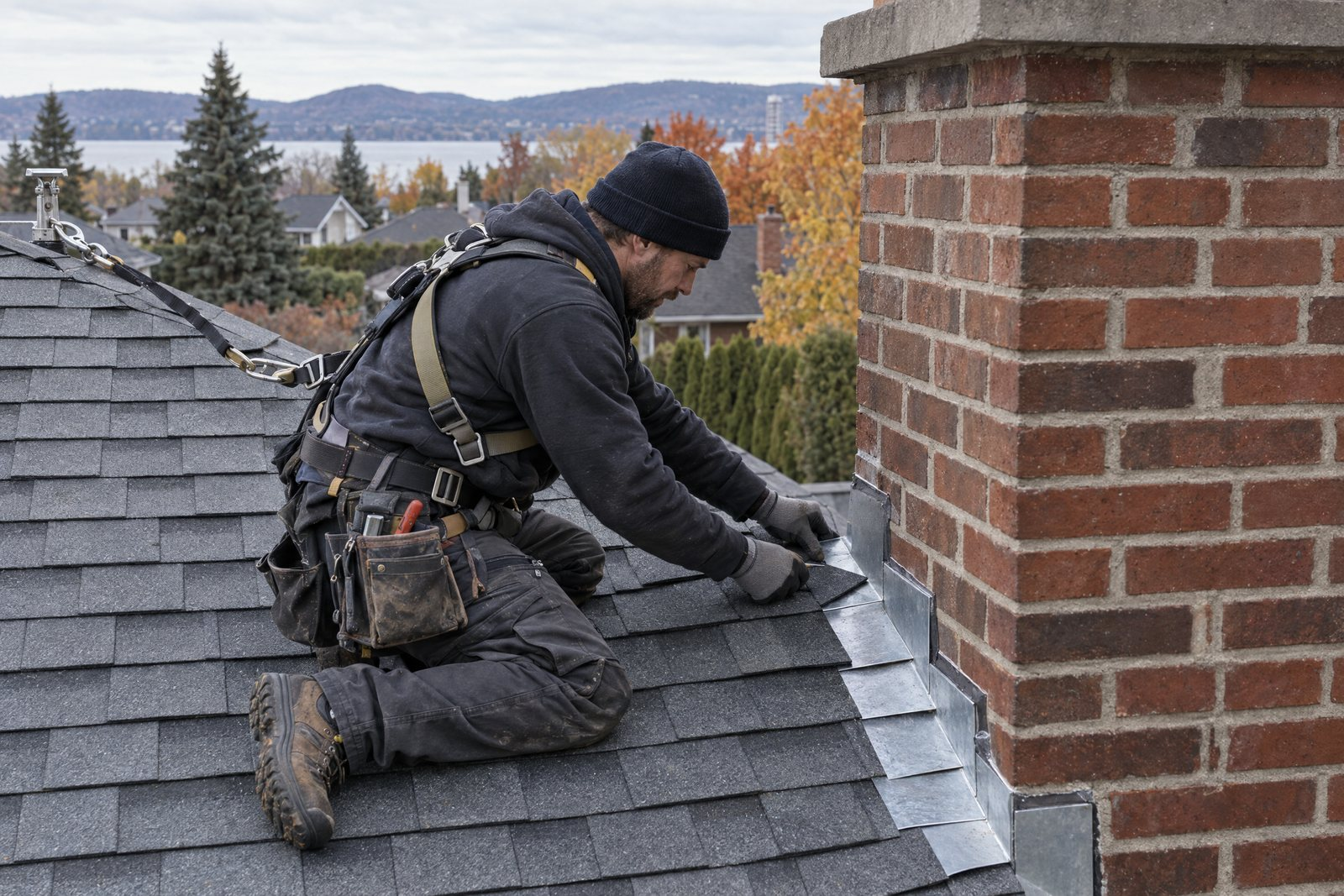
- Failing flashing: these are the metal pieces that seal the joints around chimneys, vents and walls. Over time, the caulking cracks and water seeps in. In fact, about 90% of roof leaks come from flashing.
- Ice dams: in winter, heat escaping from the attic melts the snow on the roof. The water runs to the edge, refreezes and forms a barrier. As a result, water backs up under the panels or shingles.
- Damaged shingles: cracked, curled or missing shingles let water straight through. Freeze-thaw cycles considerably speed up their deterioration.
- Clogged gutters: gutters full of debris cause water to back up. This excess water can then work its way under the roof covering through capillary action.
- Condensation in the attic: insufficient ventilation creates moisture that builds up and eventually comes through the ceiling. This type of leak is often mistaken for a roof leak.
Identifying the exact cause isn’t always simple. Indeed, the water’s entry point is often several metres away from the visible stain on the ceiling. The water travels along the rafters and deck before appearing inside.
Emergency steps to take immediately
When you spot a ceiling water leak, every minute counts. The water coming through your ceiling has already gone through the insulation, roof frame and deck. Acting quickly therefore limits the damage and reduces repair costs.
Start by placing a container under the dripping point to protect your floor. If the ceiling forms a bulge filled with water, gently pierce it in the centre with a screwdriver. This prevents the weight of the water from bringing down an entire section of the ceiling.
Next, move furniture and valuables out of the affected area. Turn off the power to the room if water is running near a light fixture or an electrical outlet. This is an essential safety precaution.
Also, take photos of all visible damage before touching anything. These photos will serve as proof for your home insurance claim. Then contact your insurer as quickly as possible to report the damage.
Finally, call a professional roofer to locate the source of the leak. Don’t try to climb onto the roof yourself, especially in winter. The surface is slippery and the risk of falling is real.
Why the source is rarely where you think
Water is unpredictable. It follows the path of least resistance and often travels long distances before finding a way out. That’s why the stain on the ceiling is rarely directly below the entry point.
For example, failing flashing around the chimney can let water in at the centre of the roof. This water then runs along a rafter for several metres. It builds up against a knot in the wood or an obstacle and eventually comes through the ceiling at the other end of the house.
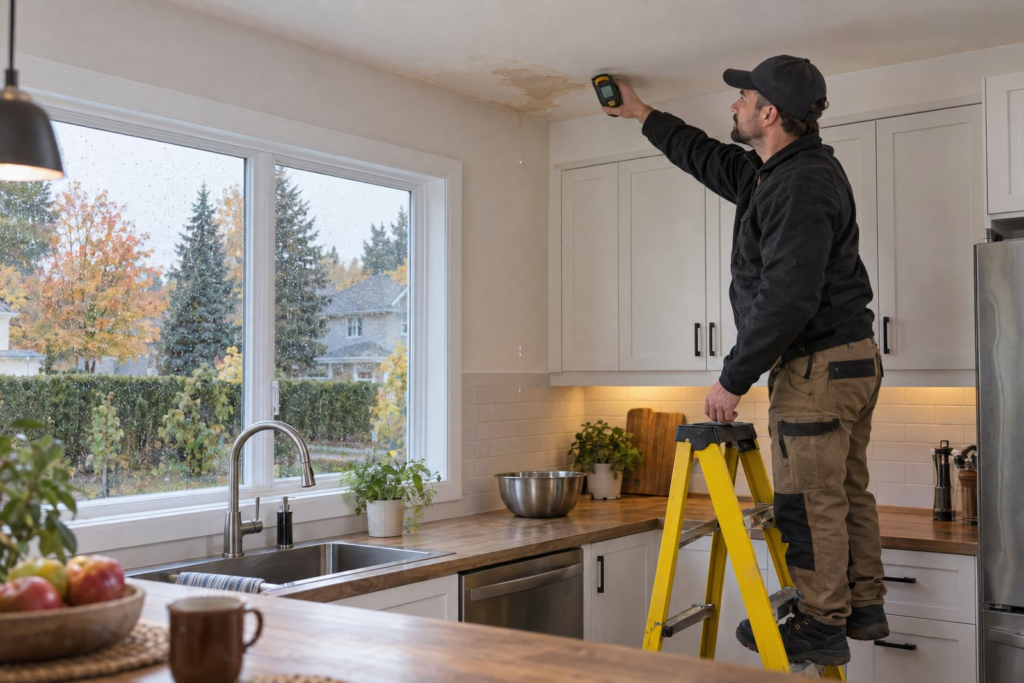
This is also why DIY repairs often fail. Applying caulking at the spot that matches the stain solves nothing if the leak comes from elsewhere. An experienced roofer, on the other hand, uses systematic detection techniques. They start inside the attic, trace the water’s path back and identify the real entry point. This step is essential for a lasting repair.
The consequences of an untreated leak
Ignoring a leak, even a small one, leads to consequences that quickly get worse. What starts as a simple stain can become a structural problem within a few months.
First, constant moisture encourages mould growth. Some moulds pose serious health risks, particularly for children, older adults and people with respiratory problems. According to the Government of Québec, mould can develop if water damage isn’t completely cleaned and dried within 24 to 48 hours.
Second, water attacks the wood frame. Constantly damp wood rots and loses its load-bearing capacity. Structural repairs then cost thousands of dollars more than a simple roof repair.
Soaked insulation also loses its effectiveness. It no longer protects against cold or heat. As a result, your energy bills go up. In addition, wet insulation that doesn’t dry completely becomes a breeding ground for mould.
In short, every week of delay multiplies the costs. A leak that costs $500 to repair today can cost $10,000 six months from now.
How to prevent leaks with the right roof
The choice of roofing material directly influences the risk of a ceiling water leak. Some materials are simply better designed to keep water out.
Asphalt shingles have hundreds of joints between each row. Each joint is a potential entry point for water. Over time, the shingles crack, lose their granules and lift in the wind. The risk of leaks therefore increases gradually.
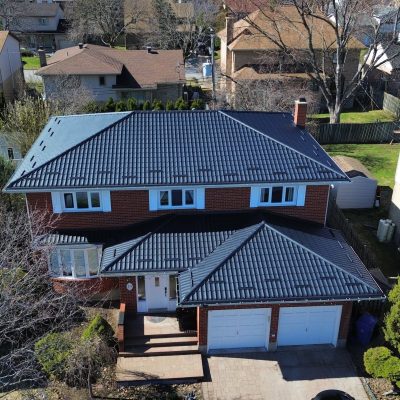
A standing seam metal roof, however, works differently. The panels cover large areas in a single piece. The vertical seams are raised and mechanically locked. As a result, water slides off the surface without finding an entry point. In addition, metal doesn’t crack, rot or lose granules.
Ice dams are also less of a problem with a metal roof. The smooth surface lets snow slide off more easily. Snow guards control its release safely. Combined with good insulation and ventilation, a metal roof therefore considerably reduces the risk of ice dams, and thus of leaks.
The role of ventilation and insulation
Your attic’s ventilation and insulation are just as important as the exterior roof covering. Indeed, a ceiling water leak isn’t always caused by a roof leak. Condensation is often the hidden culprit.
In winter, warm, humid air from your home naturally rises to the attic. If ventilation is insufficient, this moisture condenses on the cold surfaces of the deck. The water then builds up and eventually comes through the ceiling. The result looks exactly like a roof leak, but the cause is entirely different.
Perforated soffits in good condition let fresh air into the attic. Ridge vents, for their part, let humid air escape. This continuous airflow keeps the attic dry and prevents condensation.
Adequate insulation completes the system. It prevents heat from rising to the roof and thus reduces the amount of moisture that reaches the attic. The combination of ventilation and insulation is therefore your best defence against leaks, whatever the type of roof covering.
Conclusion
A ceiling water leak is never a problem to put off. Act at the first signs to limit damage to your roof frame, your insulation and your health. Identify the real source of the leak with the help of a professional rather than guessing.
Choosing the right roofing material considerably reduces the risk of leaks over the long term. A properly installed metal roof, combined with ventilation and insulation that meet standards, offers the best protection against water.
Have you spotted a suspicious stain on your ceiling? Contact Metal Roof Canada for a quick assessment and a lasting solution.