Roof flashing is probably the most important part of your roof, and yet the least known. This small metal fitting seals the most vulnerable areas of your roof covering. When it fails, water seeps directly into your home. In fact, it’s the cause of about 90% of roof leaks.
In this article, we explain the exact role of flashing, the different types available, the signs of wear to watch for and the solutions to prevent water from leaking through your ceiling. You’ll also learn why a metal roof offers a clear advantage when it comes to flashing.
What is roof flashing?
Roof flashing is a watertight fitting installed wherever the roof covering meets a vertical element. It’s found around chimneys, along adjacent walls, around skylights and near plumbing vents.
Its role is simple but essential: to prevent water from seeping into the joints. Indeed, when rain falls on your roof, it runs downward. Where the roof meets a wall or a chimney, water naturally tries to get into the gap between the two. Flashing therefore blocks this path and redirects the water back onto the roof surface.
Without flashing, these joints become open doors for water, slush and ice. In Quebec, freeze-thaw cycles make this protection even more critical. Water that seeps in freezes overnight, expands and widens the crack. The problem therefore gets worse quickly from one winter to the next.
The different types of flashing
Not all flashing is the same. Each location on the roof requires a type of roof flashing suited to its geometry and exposure.
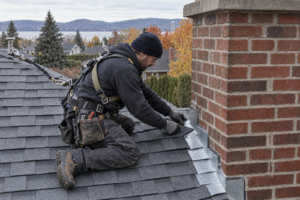
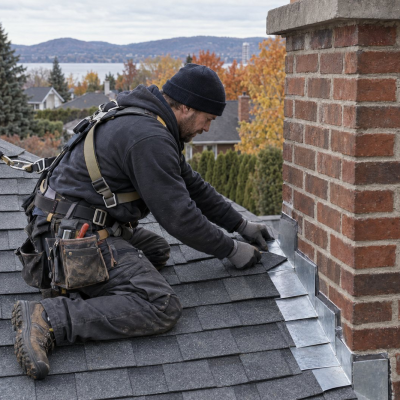
- Chimney flashing: it surrounds the base of the chimney on all four sides. It’s the most complex to install because it has to fit the shape of the masonry perfectly.
- Wall flashing: it seals the joint between the roof and an adjacent vertical wall. It’s often found where a garage meets the house or along a shared wall.
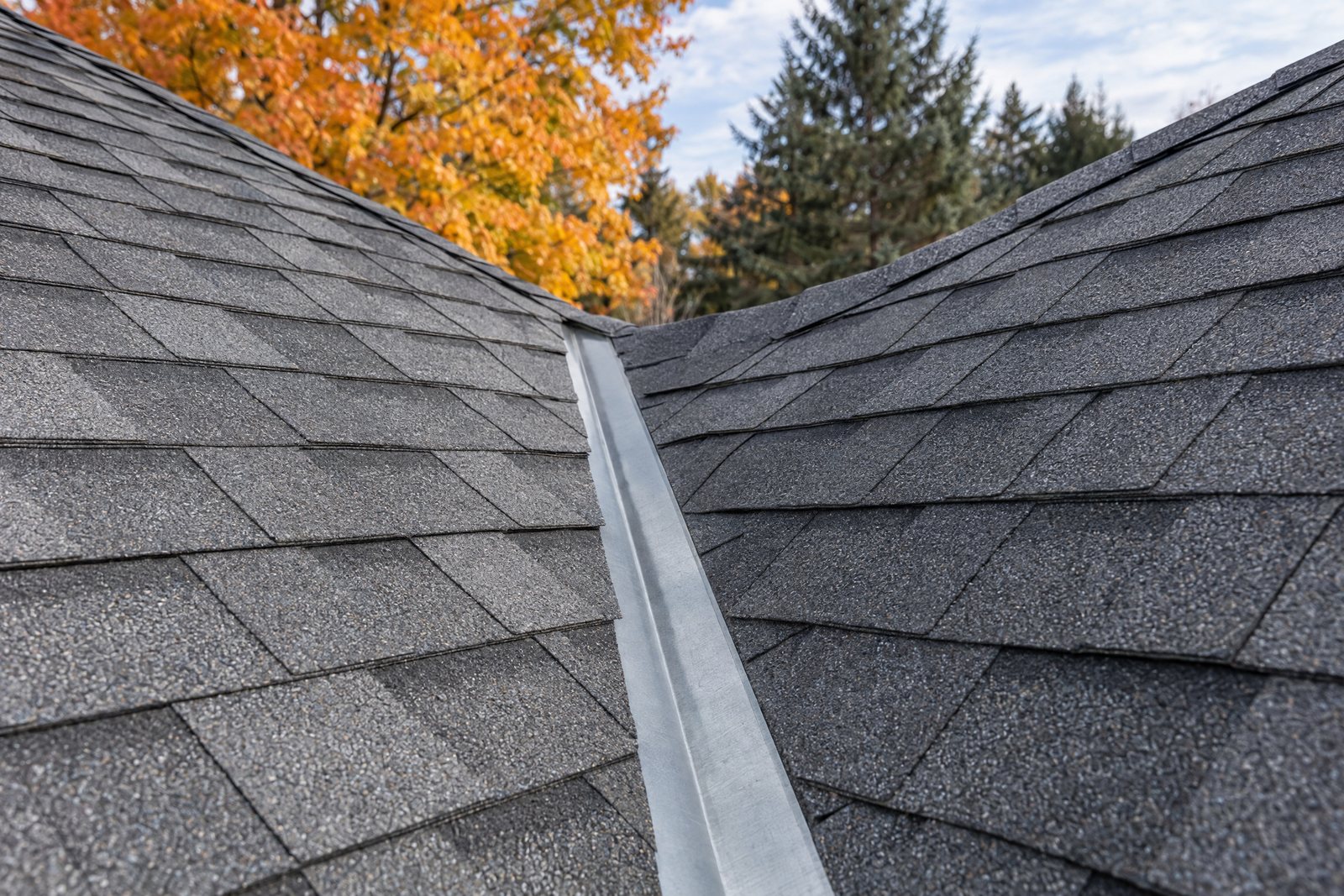
- Valley flashing: it protects the roof valleys where two slopes meet. Water converges at these points, which makes them particularly vulnerable.
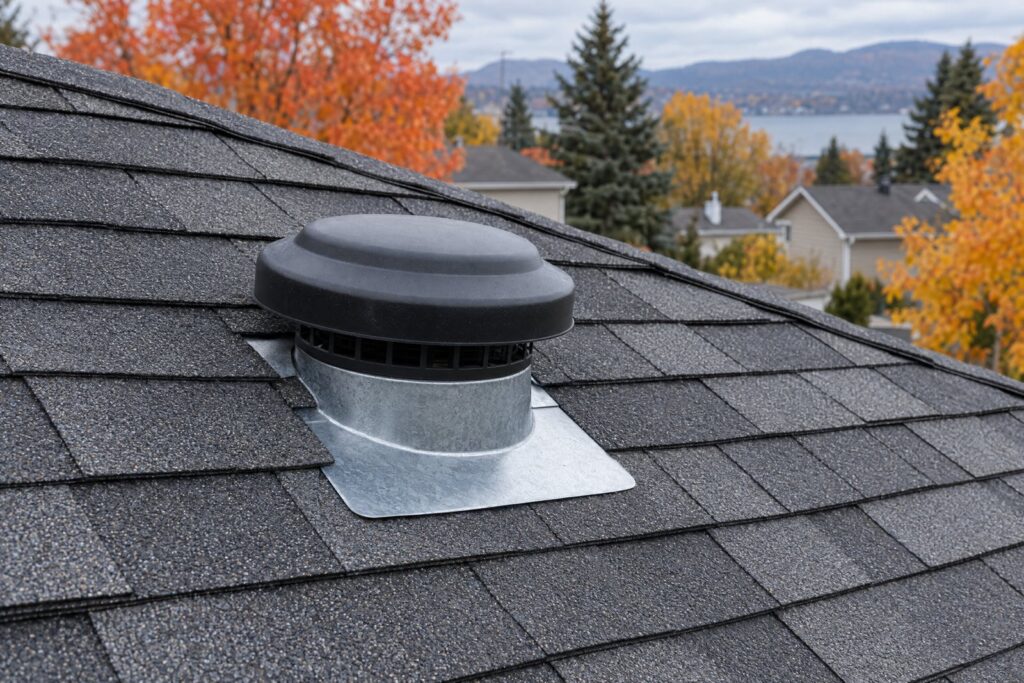
- Vent flashing: it encircles the plumbing pipes and vents that go through the roof. A metal collar with a rubber seal keeps the opening watertight.
- Step flashing: it follows the angle between a wall and a sloped roof. Each step overlaps the previous one to direct water downward.
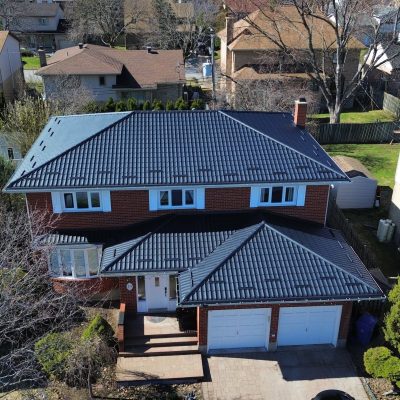
The flashing material also varies depending on the type of roof covering. Thus, on a metal roof, flashing is generally made of steel or aluminum. As a result, it’s compatible with the panels and prevents chemical reactions between different metals.
Signs that flashing is failing
Roof flashing that’s starting to fail sends signals you need to recognize. The sooner you spot them, the less the damage will cost to repair.
From the outside, look for the following clues during your seasonal inspections. Cracked, crumbling or loose caulking around the joints is the most common sign. Rust marks on the flashing metal also indicate advanced deterioration. Flashing that looks lifted or warped has probably shifted due to frost.
From the inside, the signs are just as telling. Brownish stains on the ceiling near a chimney or an exterior wall almost always point to failing flashing. A persistent damp smell in the attic often confirms the diagnosis. In addition, wet or mouldy insulation near a wall or a chimney reveals an ongoing leak.
Don’t wait for an active leak to appear before taking action. Flashing that shows signs of wear today will cause a leak during the next heavy rain or the next snowmelt.
Why does flashing fail?
Several factors explain the gradual deterioration of roof flashing. The Quebec climate is particularly hard on these components.
Caulking is the first to age. It’s under constant stress: expansion in summer, contraction in winter. After a few years, microcracks appear. Water seeps in, freezes and widens the openings. This cycle repeats until the seal loses all its watertightness.
Galvanic corrosion is also a problem when incompatible metals come into contact. For example, aluminum flashing fastened to a steel panel creates an electrochemical reaction. This reaction speeds up the corrosion of both materials. That’s why experienced roofers always use compatible metals.
A sloppy installation also considerably shortens the flashing’s lifespan. Flashing that’s poorly embedded in the wall, an apron that’s too short or an insufficient overlap create weak points from the start. According to the Régie du bâtiment du Québec, installation defects are among the most frequent causes of roof-related claims.
A sloppy installation also considerably shortens the flashing’s lifespan. Flashing that’s poorly embedded in the wall, an apron that’s too short or an insufficient overlap create weak points from the start. According to the Régie du bâtiment du Québec, installation defects are among the most frequent causes of roof-related claims.
Repair or replace flashing?
The decision depends on the extent of the damage. A simple reseal is enough in some cases. In others, a full replacement is necessary.
If the flashing metal is still in good condition and only the caulking is cracked, a professional reseal solves the problem. The roofer removes the old sealant, cleans the surface and applies a new sealant that’s compatible with your type of roof covering. This work generally costs between $200 and $600.
On the other hand, if the metal is perforated, rusted or warped, the entire piece must be replaced. Badly corroded flashing will never be watertight again, even with new caulking. Replacement costs more, but it’s the only lasting solution.
In all cases, hire a qualified professional for this work. Poorly installed flashing causes more problems than it solves. In addition, a non-compliant repair can void your roof warranty. Also, keep the invoices for every job to protect your insurance coverage.
The advantage of flashing on a metal roof
Flashing on a metal roof offers advantages that asphalt shingles can’t match. The system works in a more integrated and durable way.
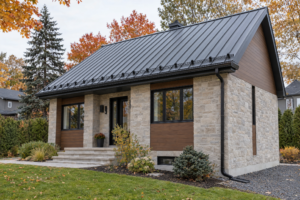
On a standing seam roof, the flashing is made from the same steel as the panels. This compatibility eliminates the risk of galvanic corrosion. The components age at the same rate, with no weak link in the chain.
In addition, metal flashing is mechanically fastened rather than simply glued. As a result, it better withstands expansion movements and high winds. Caulking plays a supporting role rather than a primary one in keeping the roof watertight.
Finally, metal flashing on a steel roof easily lasts 50 years, which is as long as the roof itself. With asphalt shingles, the flashing often outlasts the roof covering, but the caulking must be redone every 5 to 10 years. It’s an expense and a risk that a metal roof almost completely eliminates.
Conclusion
Roof flashing is small, discreet and often forgotten. However, it’s what protects the most vulnerable points of your roof. When it fails, water gets in and the damage builds up quickly. Inspect your flashing twice a year, in spring and fall. Act at the first signs of wear rather than waiting for a leak.
Choosing a metal roof with compatible steel flashing eliminates corrosion problems and extends the lifespan of the entire system.
Is your flashing showing signs of wear? Contact Metal Roof Canada for an inspection and a solution tailored to your roof.