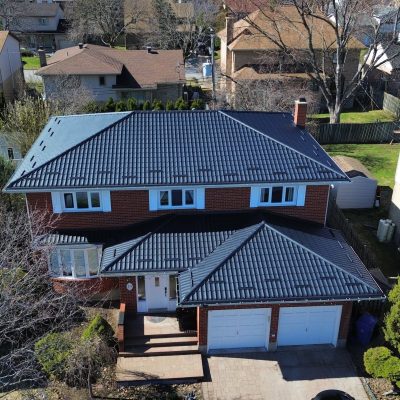
Metal roof repair is rarely as complex as people think. In the vast majority of cases, the metal itself isn’t the problem. Rather, it’s the seams, screws and flashing that fail first. A targeted intervention at the right time can therefore extend the life of your roof by several decades without redoing everything.
In this article, we identify the most common problems on a metal roof. We also explain how to recognize them, when to handle them yourself and when to call a professional.
The most common problems
A properly installed metal roof can last 50 years or more. However, some components wear out faster than the panels themselves. By knowing them, you can step in early and avoid costly damage.
- Failing flashing: it’s responsible for about 90% of leaks on a metal roof. Indeed, the caulking that seals the joints cracks over time due to temperature variations.
- Loose or corroded screws: the metal’s contraction and expansion cycles gradually loosen the fasteners. In addition, the sealing washer under the screw can also deteriorate.
- Localized corrosion: a scratch, an impact or contact with an incompatible metal creates a rust spot. If it isn’t treated quickly, the corrosion then spreads under the finish coat.
- Worn lap seams: where two panels overlap, the sealant can lose its adhesion. As a result, water seeps in during heavy rain or snowmelt.
- Dents and deformations: hail, falling branches or improper snow removal can damage the panel surface.
In most of these situations, a targeted repair is enough. Thus, a complete replacement is only necessary when corrosion affects more than 30% of the surface.
How to detect a problem before it gets worse
Metal roof repair always starts with a good inspection. The earlier you detect a problem, the less it will cost to fix. Some signs are visible from the ground, while others require a closer look.
From the outside, look for rust spots on the panels or around the fasteners. Also check whether any flashing seems loose or whether screws are sticking out of the surface. After a hailstorm, also inspect the roof for dents or scratches.
From the inside, keep an eye on the ceilings and walls of the upper floors. Indeed, brownish stains or water rings signal an active leak. A damp smell in the attic also deserves your attention. In addition, damp or mouldy insulation in the attic indicates that water has been getting through your roof for some time.
So schedule a visual inspection in spring after the snow melts and in fall before the first frosts. In fact, this schedule matches the seasonal maintenance recommendations for maximizing your roof’s longevity.
Repair it yourself or call a professional?
Some minor repairs are within reach of a handy homeowner. Others, however, require the intervention of a qualified roofer. Knowing the difference will therefore save you costly mistakes.
You can generally handle gutter cleaning, removing debris that has built up on the panels and applying a rust treatment to a small surface spot yourself. In short, these simple tasks don’t require any particular expertise.
On the other hand, leave any work that affects your roof’s watertightness to a professional. Indeed, replacing flashing, tightening screws to the right torque and repairing a perforated panel require specific know-how. Overtightening crushes the sealing washer and then creates a new leak point. Likewise, poorly installed flashing causes more damage than it prevents.
Furthermore, climbing onto a metal roof carries a risk of slipping. The smooth metal surface becomes particularly dangerous when wet. You should therefore leave this work to roofers who are equipped and insured for this type of job.
Flashing repairs: the most common case
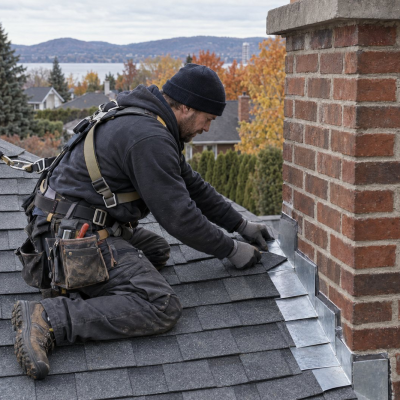
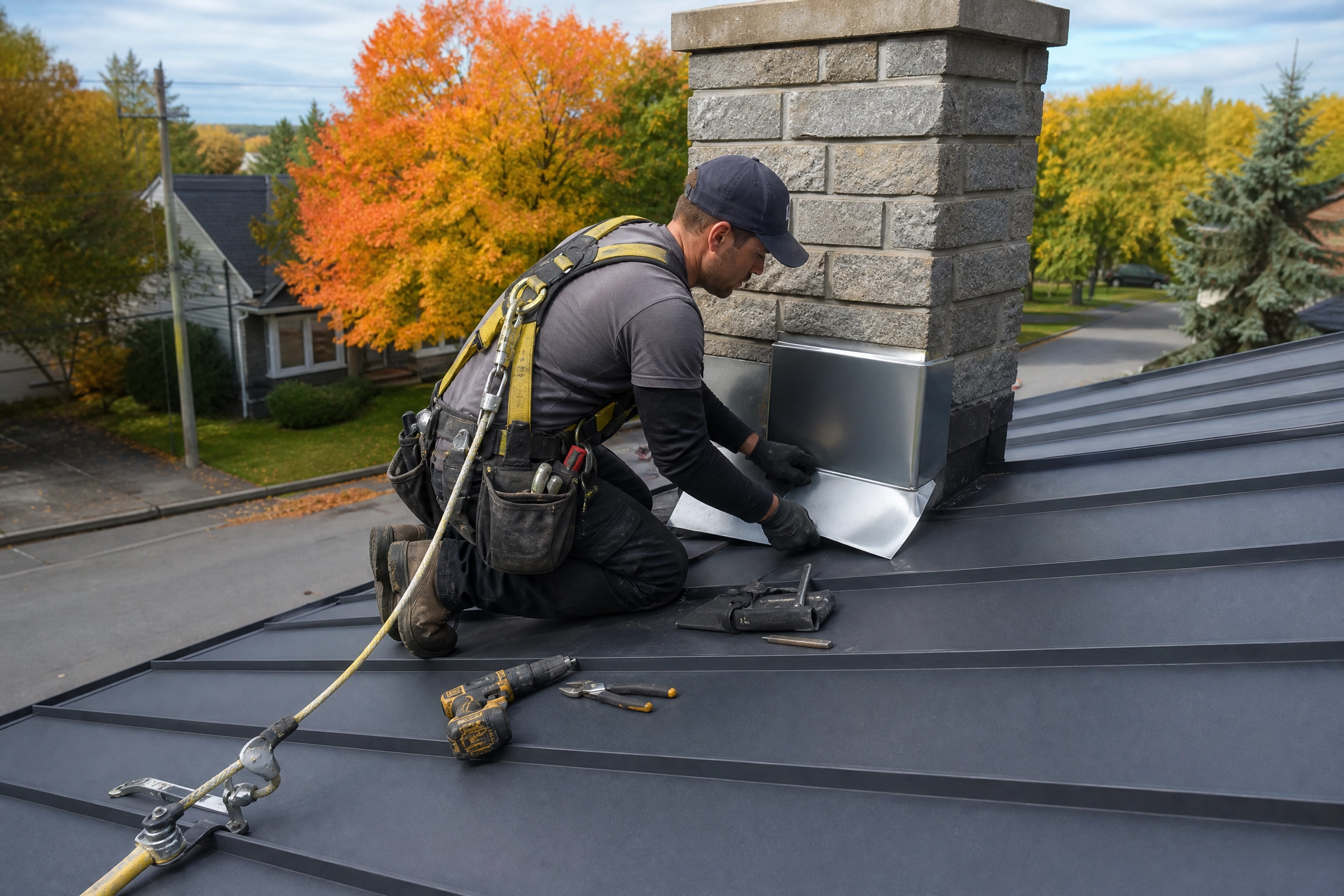
Flashing deserves a section of its own, because it’s the most common source of leaks on a metal roof. These metal pieces protect the vulnerable joints around chimneys, vents, skylights and adjacent walls.
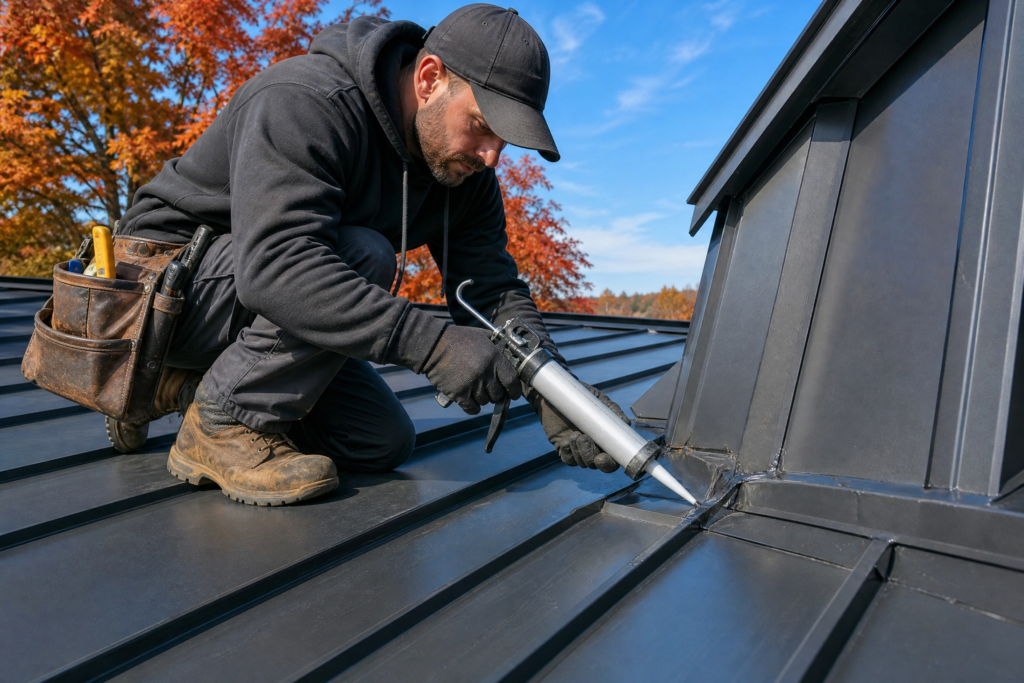
The caulking that seals the flashing is under constant stress. In summer, it expands. In winter, it contracts and hardens. After a few years, cracks appear and water finds its way in. In Quebec, freeze-thaw cycles speed up this process even further.
The repair consists of removing the old sealant, thoroughly cleaning the surface and applying a new sealant that’s compatible with your type of metal. This compatibility is essential. Indeed, an unsuitable product can cause a chemical reaction that speeds up corrosion rather than preventing it.
A specialized roofer like those at Metal Roof Canada knows which product to use in each situation. They also check the condition of the flashing itself. If the metal is perforated or too corroded, a simple reseal won’t be enough. The entire piece will then have to be replaced.
The cost of a repair versus a replacement
Metal roof repair costs a fraction of the price of a full replacement. In fact, this is one of its great advantages. Acting early on a localized problem thus saves you a much steeper bill.
Resealing flashing generally costs between $200 and $600. In addition, replacing a few corroded screws with new washers costs around $150 to $400. Finally, treating an area of localized corrosion ranges from $300 to $800 depending on its extent.
By comparison, a complete metal roof replacement costs between $15,000 and $36,000 for an average home. The gap is considerable. That’s why preventive maintenance and prompt repairs are the best financial strategy.
However, when corrosion affects more than 30% of the surface, repeated repairs end up costing more than a replacement. An honest roofer will be able to tell you whether your roof is still worth repairing or whether it’s time for a new roof covering.
Protecting your warranty during repairs
A poorly executed metal roof repair can void your warranty. Many homeowners learn this the hard way after hiring an unqualified contractor or attempting a DIY repair.
Most manufacturer warranties require repairs to be carried out according to the manufacturer’s specifications. Using an unapproved caulking product or drilling into a panel without following the standards can be enough to void your coverage. The same applies if an uncertified roofer works on your roof.
Before any repair, therefore, check your warranty conditions. Contact your original installer whenever possible. If that’s no longer an option, choose a roofer who knows your type of roof and the manufacturer’s requirements. Also, keep the invoices and photos of every job. These documents prove that the repairs were done properly.
Prevention is better than repair
The best way to reduce repairs is to prevent them. A few simple habits are enough to keep your roof in excellent condition for decades.
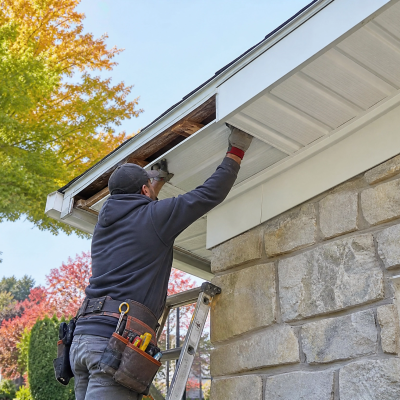
Clean your gutters twice a year to prevent water from backing up. Remove the branches and debris that build up on the panels, especially in valleys and corners. Check the condition of the flashing at every change of season.
Also, make sure your attic ventilation is working properly. Condensation remains metal’s silent enemy. Indeed, it corrodes the panels from the inside without you seeing anything from the outside. According to the Régie du bâtiment du Québec, ventilation that meets standards protects the structure as much as the roof covering.
Finally, schedule a professional inspection every 3 to 5 years. An experienced roofer can spot problems before they become visible. This preventive visit costs a few hundred dollars and can save you thousands.
Conclusion
Metal roof repair is almost always more economical than a replacement. Flashing, screws and seams wear out well before the panels themselves. Acting quickly on these weak points therefore extends the life of your roof by several decades.
Watch for signs of wear, follow a minimal maintenance schedule and call a specialist for any work that affects watertightness. These simple steps protect your investment and your warranty.
Have you spotted a problem on your metal roof? Contact Metal Roof Canada for a quick assessment and long-lasting solutions.