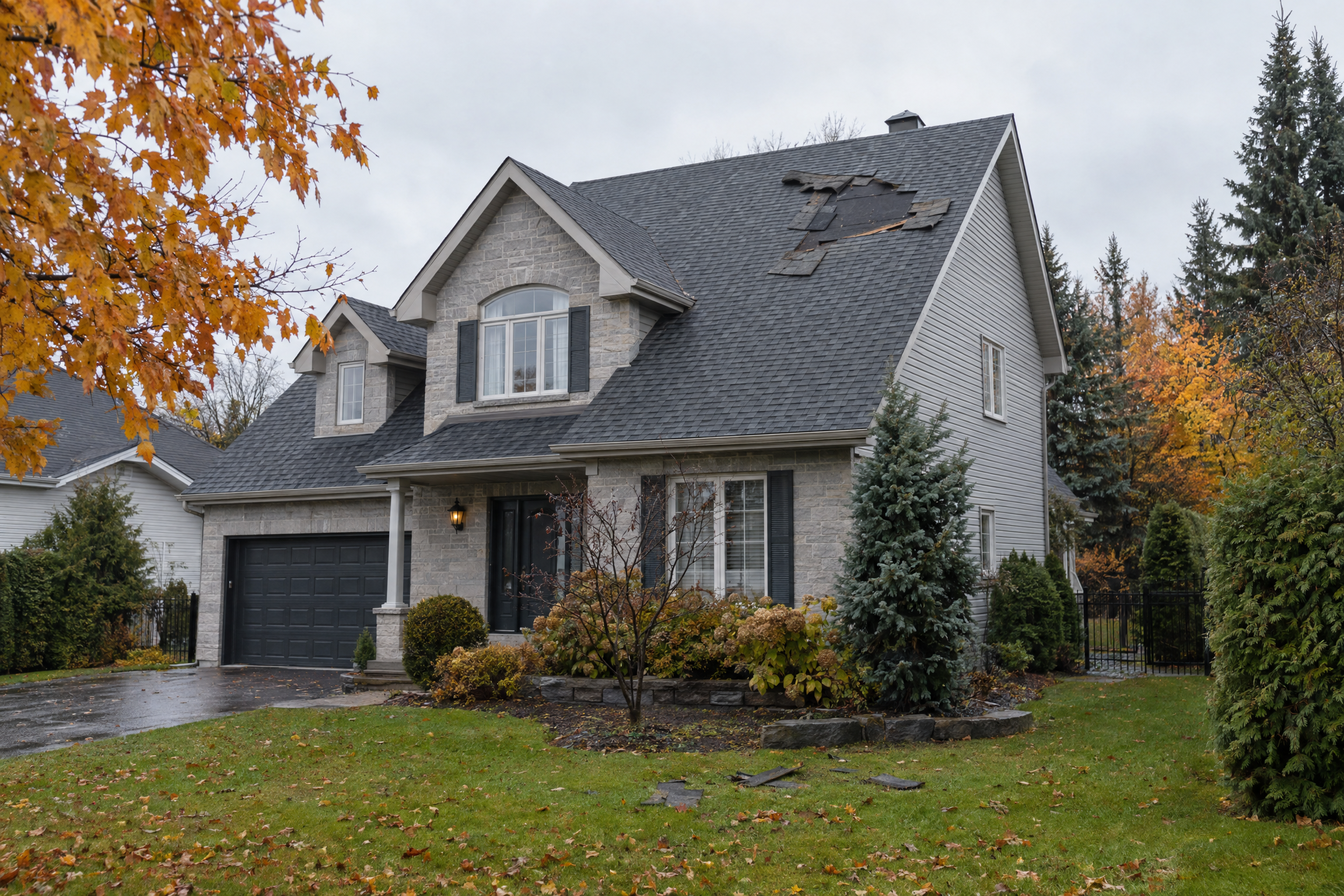
A damaged roof can never wait. Whether it’s a windstorm, falling branches or ice buildup, damage to your roof immediately puts your home at risk. Indeed, every hour without action lets water seep into your insulation, roof frame and ceilings.
In this article, we detail the most common types of damage in Quebec and the emergency steps to take. We also explain why some materials hold up better than others and how to protect your investment over the long term.
The most common causes of damage in Quebec
The Quebec climate puts roofs to the test all year long. However, some seasons are more destructive than others. Here are the main causes of a damaged roof in the province.
- High winds: they lift shingles, tear off flashing and shift poorly fastened panels. Gusts of 90 km/h are enough to cause serious damage.
- Hail: it strikes the surface with considerable force. On shingles, it knocks off the protective granules. On low-gauge metal, it leaves dents.
- Snow buildup: excessive weight on the roof can deform the roof frame. The ice dams that form at the edge make the problem worse by forcing water under the roof covering.
- Falling branches: a mature tree can drop a branch weighing several hundred pounds onto your roof. The result is often a perforated panel or a section of torn-off shingles.
- Repeated freeze-thaw cycles: these cycles crack the flashing caulking and deteriorate the seals. Water then seeps into the openings created.
In Quebec, most roof-related insurance claims occur between November and April. This is therefore the period when vigilance must be at its highest.
Signs of a damaged roof
Some damage is obvious from the ground. Other damage, however, remains invisible for weeks before showing up inside the house. Knowing what to look for therefore allows you to act before the situation gets out of hand.
From the outside, watch for missing, lifted or cracked shingles. Also look for roofing debris on the ground after a storm. Bent or detached gutters also signal a significant impact. Finally, check whether any flashing seems to have shifted or whether screws are sticking out of the surface on a metal roof.
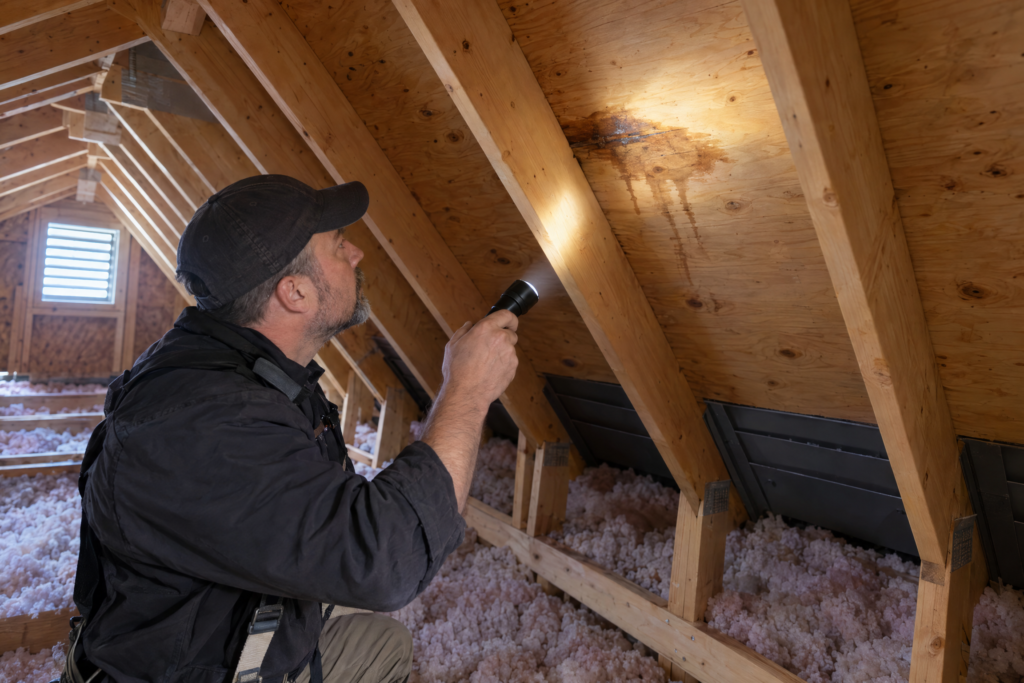
From the inside, the clues are just as telling. Brownish stains on the ceiling indicate an active water leak. A damp smell in the attic often confirms the diagnosis. Wet insulation or visible mould on the roof frame, for their part, signal a problem that has been going on for some time.
After every severe weather event, do a visual tour of your property. This simple habit allows you to spot damage quickly and limit repair costs.
Emergency steps to take
When faced with a damaged roof, every minute counts. Here are the steps to take immediately to limit the damage and protect your home.
First, secure the interior. Place containers under the dripping points and move furniture out of the affected area. If water is running near a light fixture or an outlet, turn off the power to that room. This is an essential safety precaution.
Next, document all visible damage. Take photos and videos before touching anything. This proof will be essential for your home insurance claim. In fact, contact your insurer as quickly as possible to report the damage.
Also, call a professional roofer for an emergency intervention. They can install a temporary tarp or make a temporary repair while waiting for the full job. However, avoid climbing onto the roof yourself. A damaged roof can be unstable, slippery and dangerous, especially after a storm.
Finally, don’t attempt permanent repairs yourself. Poorly executed work can make the damage worse and void your warranty.
Repair or replace: how to decide?
After the emergency, one question arises: should you repair or replace the roof? The answer depends on the extent of the damage and the age of your roof.
A repair is generally enough if the damage is localized. Flashing to reseal, a few shingles to replace or a small area of corrosion to treat don’t justify a complete replacement. The cost then remains modest, between $200 and $2,000 depending on the extent.
On the other hand, a replacement is necessary in some situations. If more than 30% of the surface is affected, repeated repairs will cost more than a new roof. If your shingles are already 15 years old or more, investing in repairs on a material at the end of its life doesn’t make sense either.
In fact, this is the ideal time to consider switching to metal. Rather than replacing shingles with shingles, invest in a roof covering that will stand up to the next storms. A properly installed metal roof won’t end up in the same situation after 15 years.
Why metal holds up better against the elements
A roof damaged by a storm is almost always an asphalt shingle roof. Indeed, metal stands up much better to Quebec’s extreme conditions, and here’s why.
Shingles lift in the wind because they’re bonded to the surface by a thermal sealant. When this sealant ages, the wind gets under the shingles and tears them off. A standing seam metal roof, on the other hand, is mechanically fastened. The panels are locked together and screwed to the structure. As a result, winds of 200 km/h aren’t enough to dislodge them.
Hail also causes less damage to metal. Indeed, 24-gauge steel absorbs impacts without being perforated. Shingles, by comparison, lose their granules at the slightest hailstone. This loss exposes the asphalt to UV rays and speeds up its deterioration.
Finally, metal doesn’t retain water and doesn’t rot. Even after minor damage, it continues to protect the structure while waiting for the repair. In fact, the experts at Metal Roof Canada install roofs designed specifically to withstand the Canadian climate.
Prevention: your best protection
Preventing damage always costs less than repairing it. A few simple habits considerably reduce the risk of a damaged roof.
Have your roof inspected twice a year, in spring and fall. Check the condition of the flashing, fasteners and gutters at every inspection. Also, clean the gutters to prevent water backups and ice dams in winter.
Trim the tree branches that overhang your roof. In a storm, they’re the ones that cause the most significant damage. In addition, make sure your attic ventilation and insulation meet standards. Adequate ventilation prevents condensation and reduces ice formation.
Finally, schedule a professional inspection every 3 to 5 years. According to the Insurance Bureau of Canada, a well-maintained roof reduces the risk of claims and may earn you better insurance rates.
Conclusion
A damaged roof requires a quick and methodical response. Secure the interior, document the damage, contact your insurer and call a professional roofer. Never climb onto a damaged roof yourself.
If your roof needs to be replaced, now is the time to consider metal. Its resistance to wind, hail and frost makes it the safest choice for the Quebec climate.
Has your roof been damaged? Contact Metal Roof Canada for a quick assessment and a solution tailored to your situation.