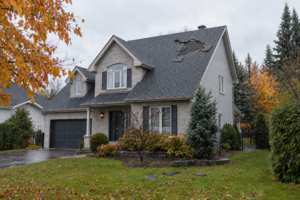
An exterior home renovation is an exciting project, but also a major investment. In Quebec, the total bill can easily reach $30,000 to $60,000 depending on the size of the property. Doing the work in the wrong order therefore means risking wasting part of that budget.
In this article, we explain the logical order to follow when renovating the exterior of your home. From the roof to the gutters, each step prepares the next. We also detail why doing everything at the same time with the right materials saves you money in the long run.
Why the order of work is so important
During an exterior home renovation, many homeowners start with what’s most visible: the siding. This is a common mistake. Indeed, the roof protects everything below it. If you redo the walls before the roof, the roofing work could damage your new siding.
In addition, soffits and fascia are located at the junction between the roof and the walls. They therefore need to be installed after the roof but before the siding. Gutters, for their part, come last, since they’re attached to the fascia.
By following this order, each component builds on the previous one. You thus avoid costly rework and unnecessary touch-ups. The contractor also works more efficiently when the steps follow each other logically.
Step 1: the roof, the foundation of everything
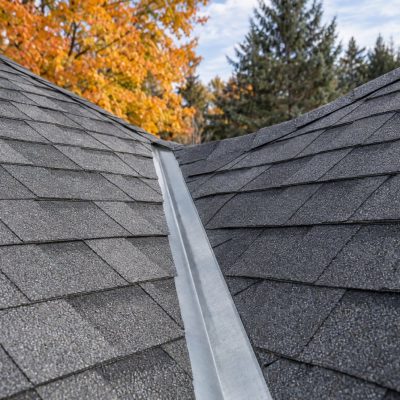
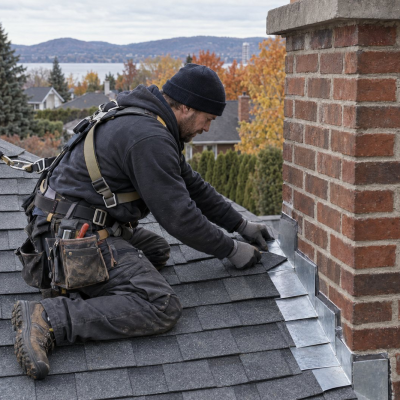
The roof is the first element to redo during an exterior home renovation. It’s what protects the roof frame, insulation, walls and foundation. As long as your roof isn’t in good shape, no other exterior work is truly protected.
Take advantage of this step to inspect the roof frame and wood deck. It’s the only time these elements are accessible at no extra cost. The roofer can then replace sections of rotten wood and check that the structure is sound.
It’s also the ideal time to improve your attic insulation and ventilation. A new roof installed over poor insulation will never perform to its full potential. As a result, ice dams and condensation problems will come back despite the new roof covering.
The choice of material is obviously crucial at this step. A metal roof lasts 50 to 70 years. This choice therefore eliminates future replacements and creates a solid base for the rest of your renovations.
Step 2: soffits and fascia
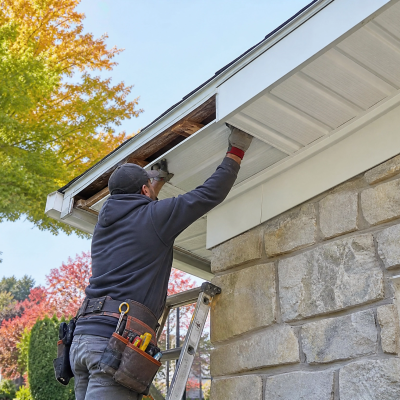
Once the roof is installed, the soffits and fascia complete the edge. These components provide the transition between the roof and the exterior walls. They also play an essential role in attic ventilation.
Perforated soffits let fresh air into the attic. Without them, moisture builds up and causes condensation, mould and damage to the roof frame. Soffits in good condition therefore protect the investment you’ve just made in your roof.
The fascia, for its part, supports the gutters. It must be sturdy, straight and water-resistant. Rotten or warped wood fascia won’t hold the gutters properly. Water will then overflow along your walls and damage the new siding.
For maximum consistency, choose steel soffits and fascia that match your metal roof. Everything ages at the same pace. In other words, no component will fail before the others.
Step 3: exterior siding
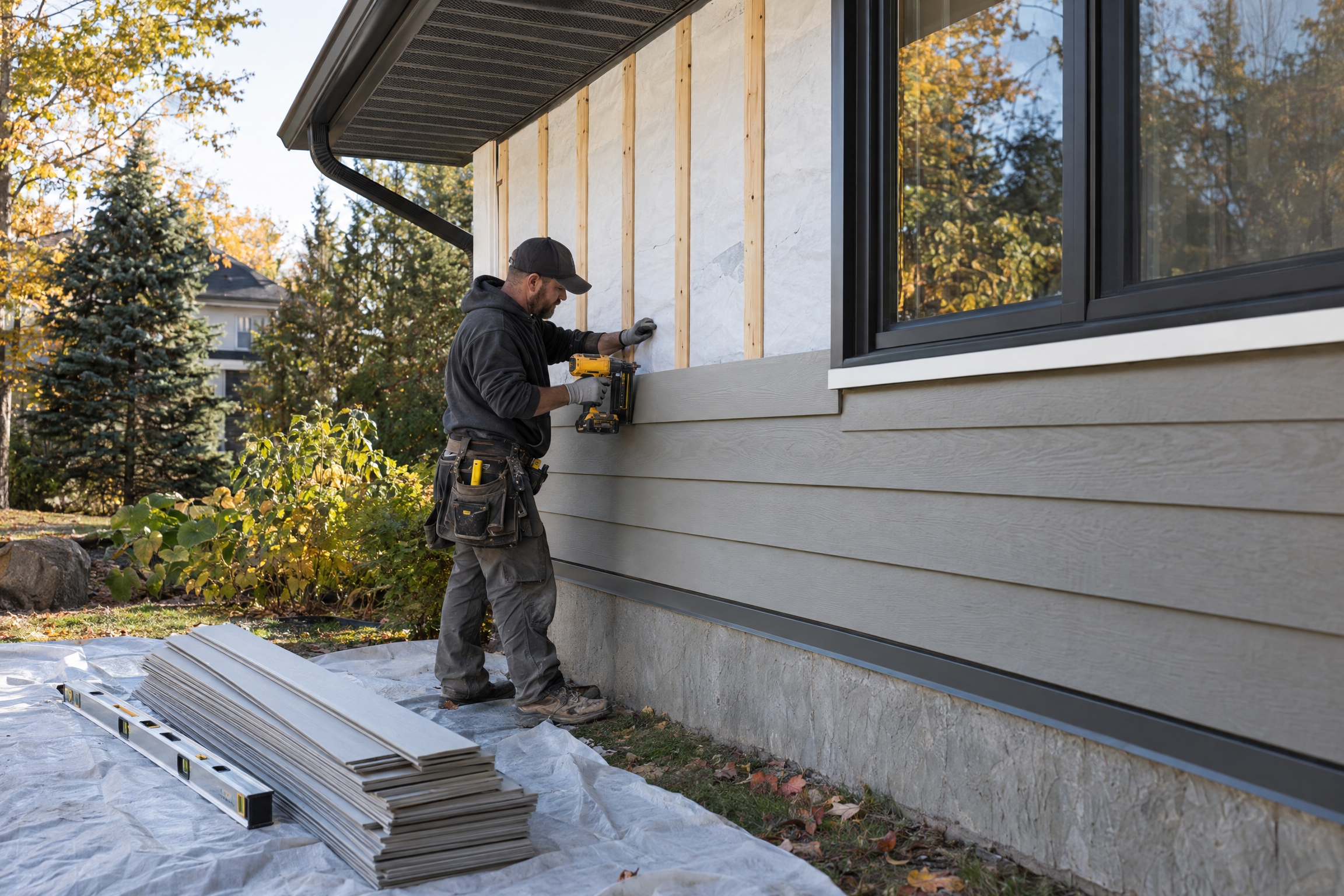
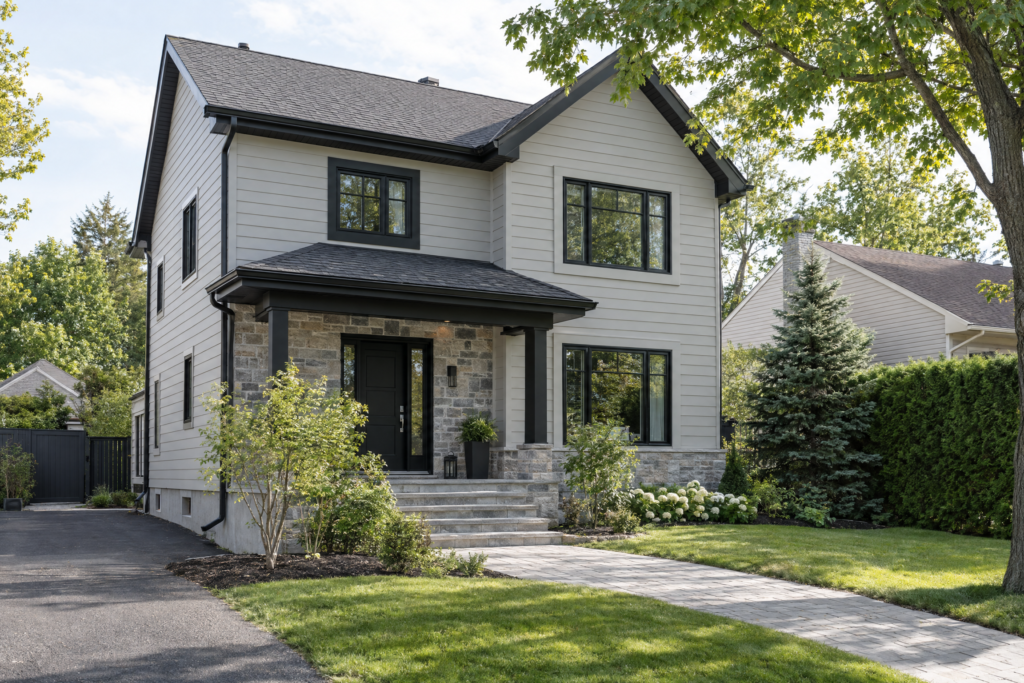
Siding is the most visible part of your exterior home renovation. It’s what transforms the look of your property and turns heads on the street. However, it must be installed after the roof and soffits to avoid rework.
Before installing the new siding, the contractor installs the air barrier membrane and exterior insulation if needed. This step considerably improves your home’s energy efficiency. In Quebec, a good thermal envelope reduces heating costs in a measurable way.
The choice of material depends on your budget, your style and your maintenance expectations. Steel siding offers the best durability, with a lifespan of 40 to 60 years. Vinyl, on the other hand, remains the most affordable, but it doesn’t last nearly as long.
Combining a metal roof with steel siding creates a complete, consistent system. The colours match naturally when both come from the same manufacturer. The result is a uniform appearance that keeps its shine for decades.
Step 4: gutters and downspouts
Gutters come last because they’re attached to the fascia. Installing the gutters before the fascia or the siding would require removing and reinstalling them, which leads to unnecessary costs.
Choose gutters that are compatible with your type of roof. On a metal roof, water runs off faster than on shingles. Your gutters must therefore be sized accordingly to handle this higher flow.
Seamless gutters are the best choice for a complete renovation. They’re made on site in a single piece, with no joints. As a result, there are no weak points and no risk of leaks. It’s the perfect finishing touch for a well-planned project.
Also, take advantage of this step to install gutter guards if your property is surrounded by trees. These screens keep debris from clogging your gutters and considerably reduce the maintenance needed over the years.
Doing everything at once: the advantages
Renovating your home’s entire exterior in a single project offers concrete advantages that step-by-step renovations can’t match.
First, you save on labour. The scaffolding is set up only once. The crew is already on site. Adding siding or soffits to a roofing project therefore costs much less than bringing in a separate crew six months later.
Second, coordination between trades is simplified. A single contractor who manages the roof, soffits, siding and gutters ensures better consistency. The joints between the different components are handled in the right order, by the same team.
In addition, you get a much more harmonious aesthetic result. Colours, textures and finishes are chosen together rather than over the years. Your home looks like a well-thought-out project, not a collection of successive renovations.
Finally, a complete project increases resale value more than a series of isolated jobs. Potential buyers recognize a consistent, well-executed exterior envelope.
The budget: what to expect
A complete exterior home renovation represents a significant investment. Here are the price ranges in Quebec in 2026.
- Metal roof: between $15,000 and $36,000 depending on the type of metal and the surface area.
- Steel soffits and fascia: between $3,000 and $8,000 depending on the perimeter of the house.
- Steel siding: between $22,500 and $60,000 depending on the profile and wall surface.
- Seamless steel gutters: between $2,000 and $5,000 depending on the total length.
The total can therefore range from $42,500 to $109,000 for an average home. It’s a considerable investment, but it eliminates all major maintenance for 50 years. According to CAA-Québec’s renovation guide, exterior renovations also offer the best return on investment at resale.
Also, check whether grants apply to your project. Programs such as Hydro-Québec’s LogisVert offer financial assistance for energy-efficient upgrades, including insulation.
Conclusion
A successful exterior home renovation follows a logical order: the roof first, then the soffits and fascia, the siding and finally the gutters. Each step prepares the next and protects the work already done.
Choosing durable, compatible materials transforms your home for the next 50 years. A complete steel system ages uniformly, with no component needing replacement before the others.
Planning a complete exterior renovation? Contact Metal Roof Canada for a quote that covers the roof, soffits, siding and gutters in a single turnkey project.